


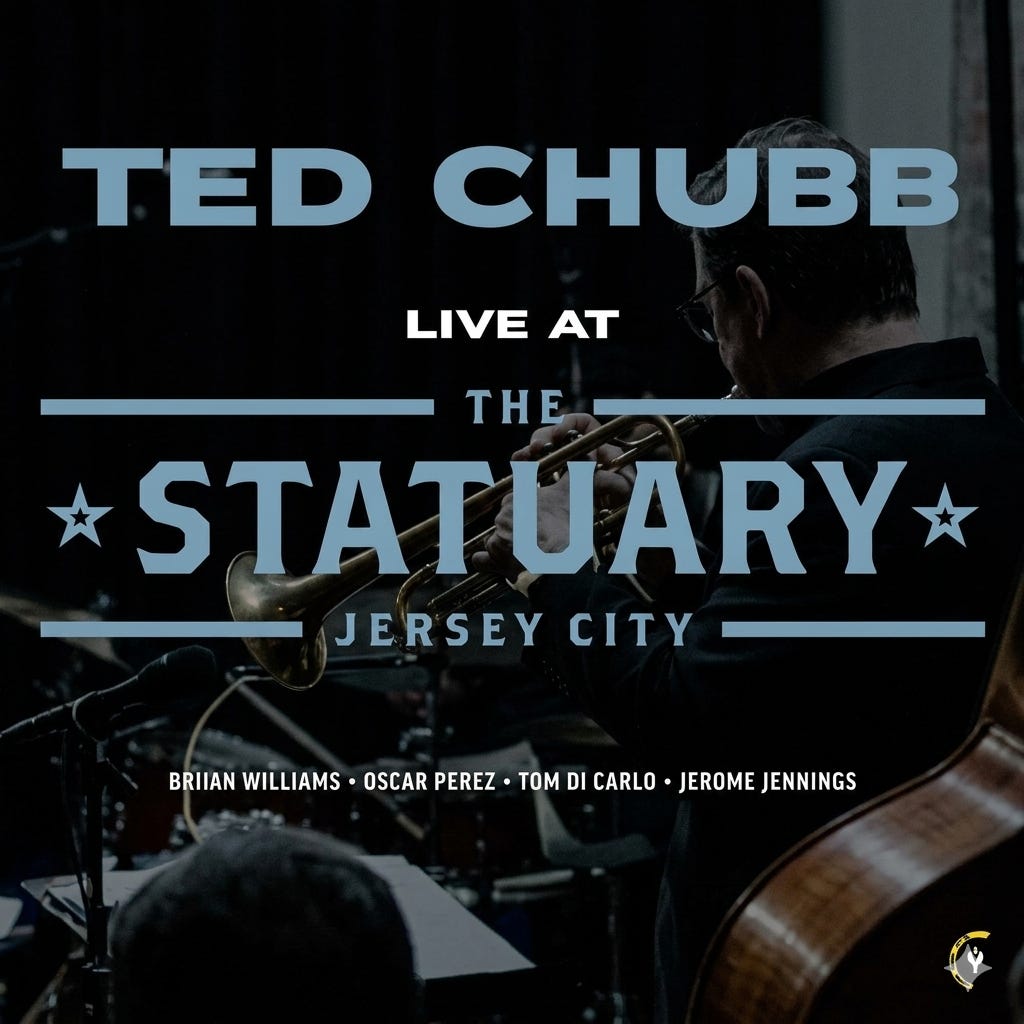
Ted Chubb occupies a singular position within the contemporary jazz ecosystem of the New York metropolitan area, functioning simultaneously as a world-class hard-bop trumpeter and a dedicated cultural steward. Grounded in the distinct blues phrasing and lyrical storytelling traditions of masters such as Booker Little and Kenny Dorham, Chubb’s artistic output remains structurally inseparable from the community institutions he cultivates. His release, Live at The Statuary, serves as a profound physical archive of this dual purpose. The recording documents not merely a performance, but the specific acoustic and social energy of a historic Jersey City venue that he preserved, restored, and converted into a neighborhood arts sanctuary.
Chubb’s musical development originated in Ashtabula, Ohio, where started trumpet studies at age ten, influenced by the recordings of Miles Davis and Lee Morgan. Following an early apprenticeship alongside Midwestern jazz practitioners while attending Ohio State University, he moved to New Jersey in 2003 to pursue advanced studies at Rutgers University under the revered trumpet pedagogue William B. Fielder. Fielder’s operational philosophy—“Gratified Never Satisfied”—profoundly shaped Chubb’s creative work ethic, ultimately providing the title for his critically acclaimed 2017 solo release.
Over the subsequent two decades, Chubb established himself as a fixture of the regional musical landscape. He executed over 1,500 performances with the Broadway touring production Jersey Boys, while concurrently developing his straight-ahead credentials within Manhattan jazz institutions alongside notable figures such as Christian McBride and Wallace Roney. Beyond performance, Chubb serves on the jazz faculty at Princeton University, completed a ten-year tenure as Vice President of Jazz Education for Jazz House Kids, and actively co-directs both the Montclair and Jersey City Jazz Festivals.
This systemic commitment to the jazz ecosystem culminated local efforts to preserve The Statuary, a 1907 brick industrial structure located in Jersey City Heights that originally functioned as a manufacturing workshop for Catholic religious iconography. In 2020, amidst the severe disruptions imposed upon the performing arts by the global pandemic, Chubb and his wife, Rachel Ryll, acquired the property and invested over $100,000 to transform the space into an intimate community arts hub. Working under a suggested-donation model designed to eliminate financial barriers to entry, the venue integrates high-caliber jazz performance directly into a residential neighborhood context, maintaining a strict capacity limit of 40 attendees. Architecturally and conceptually designed to evoke the aesthetic grit and performative intensity of the historic 1970s New York “Jazz Loft” movement, the space positions auditors mere feet from the bandstand, causing the room to function dynamically as an active participant within the ensemble’s collective improvisation.
The resulting recording, Live at The Statuary, stands as the definitive documentation of this institutional project. Captured across four intimate concert sessions by an intuitive quintet—comprising saxophonist Bruce Williams, pianist Oscar Perez, bassist Tom DiCarlo, and drummer Jerome Jennings—the album deliberately eschews sterile studio perfection in pursuit of raw emotional honesty. The final audio mix intentionally retains the vibrant ambient acoustics of the room, organic audience responses, and the physical proximity of the listeners. Ultimately, the recording serves as both a master class in modern hard bop and a living archive of historic preservation, demonstrating an integrated ecosystem where musical lineage, architectural history, and local community engagement exist in a state of reciprocal feedback.