

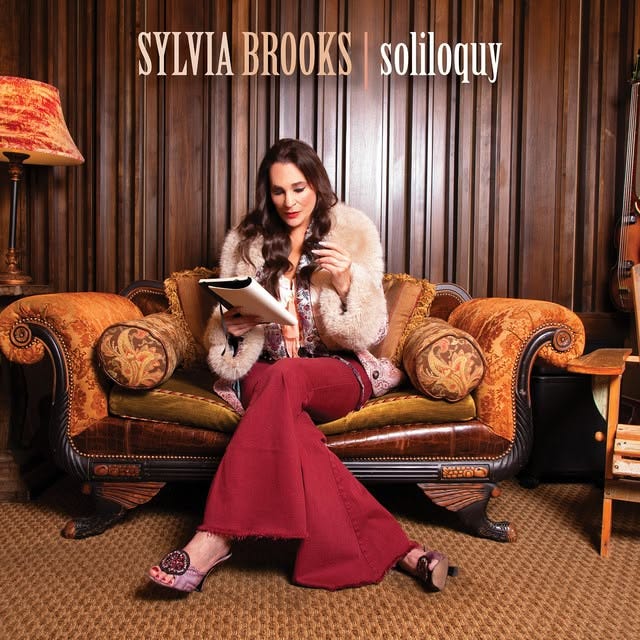
The vocal artistry of Sylvia Brooks represents a sophisticated synthesis of mid-century jazz idiom and rigorous theatrical method, an intersection developed during her tenure at the American Conservatory Theater. This dramatic lineage informs her proprietary “jazz noir” aesthetic, a conceptual framework wherein lyricism transcends mere melodic interpretation to function as profound psychological discourse. Brooks operates within a lineage of radical vocal dramatists, echoing the socio-emotional gravity of Abbey Lincoln, whose performances famously traded traditional swing for a narrative-driven realism. Her discography clarifies a deliberate forward momentum: her early efforts, Dangerous Liaisons (Maxi Trax, 2009) and Restless (Maxi Trax, 2012), synthesized the cinematic, fatalistic images of hard-boiled narratives, while The Arrangement (Self-released, 2017) expanded her sonic architecture through complex big-band and Latin modulations. By Signature (Rhombus, 2022), Brooks had transitioned from an interpreter of the Great American Songbook to an independent creator establishing her own compositional canon.
With Soliloquy (SBM Records, 2026), Brooks executes a decisive fundamental change, abandoning the protective strategy of the noir persona to pioneer a modality she designates as “Lyric Jazz”—an unvarnished, phenomenological exploration of human vulnerability and existential resilience. While her catalog derived aesthetic tension from the chiaroscuro of the shadows, this contemporary song cycle demands a confessional soul. This approach mirrors the stark intimacy of Nina Simone, whose own genre-defying work frequently dismantled the barrier between the performer’s raw psyche and the listener.
The album expertly balances re-contextualized canonical works against deeply observed original compositions. The poignant jazz waltz “Lizzie’s Dance,” a tribute to a dancer with Down syndrome, and the conceptually rigorous “A Letter to Sophie”—inspired by the visual art of Sophie Calle—sidestep the romantic defeatism of her earlier repertoire in favor of a considered, empathetic realism. This emotional transparency governs her interpretive approach to external texts; her minimalist interrogations of Sting’s “Fragile” and Tom Waits’s “Temptation” systematically strip away pop artifice to expose their naked harmonic and narrative architecture, demanding the close text-reading spearheaded by Lincoln on late-career masterworks like You Gotta Pay the Band (Verve, 1991).
To manifest this acoustic intimacy, Brooks uses a live-to-tape recording method that prioritizes organic, dialogic interplay over sterile studio perfection. The album’s structural integrity is safeguarded by pianist and arranger Christian Jacob, whose telepathic collaborative relationship with Brooks provides a minimalist, harmonically sophisticated canvas. Backed by a virtuosic West Coast quintet—comprising bassist Kevin Axt, drummer Kevin Winard, guitarist Grant Geissman, and saxophonist Farzin Farhadi—Brooks avoids histrionic vocal calisthenics. Much like Simone, who weaponized silence and deliberate pacing to amplify the weight of a single phrase, Brooks employs disciplined micro-phrasing and subtle emotional precision that solidifies her standing as an intellectually rigorous stylist within the contemporary landscape.
Soliloquy approaches a watershed moment in Sylvia Brooks’s discography, representing the full harmonization of her dual identities as a consummate actress and a probing jazz vocalist. By stripping cinematic veneer of her earlier noir periods, Brooks does not diminish her dramatic impact; rather, she intensifies it, delivering an essay on human resilience that is as intellectually rigorous as it is emotionally arresting. Supported by Jacob’s masterfully understated arrangements, the album challenges the contemporary jazz landscape to re-examine the transformative power of lyricism when married to absolute emotional transparency. It is a worthy addition to the modern vocal jazz canon, charging Brooks’s legacy not merely as an interpreter of song, but as an effective chronicler of the human condition.