


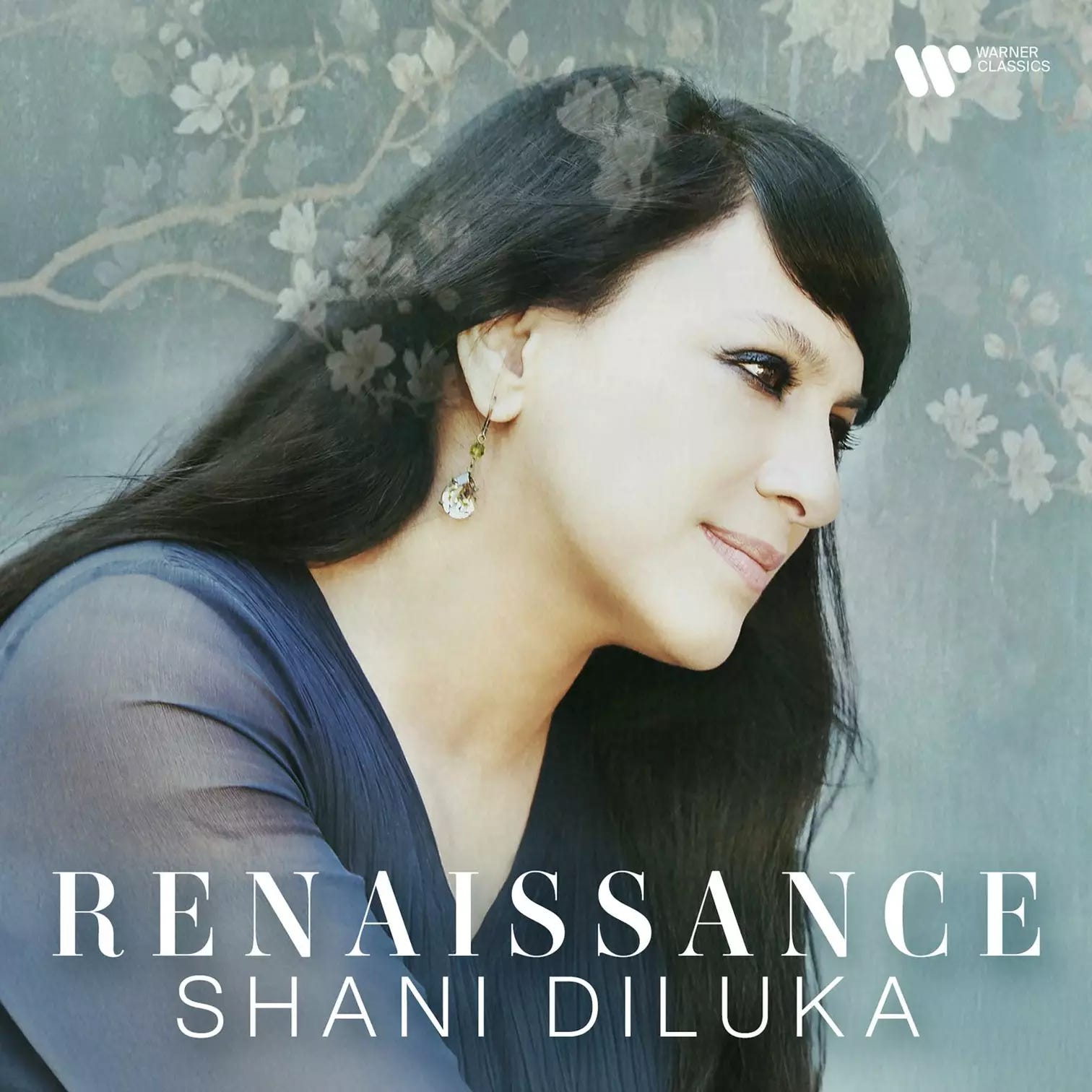
Rarely has a pianist taken such firm command of the Baroque keyboard music played on a modern piano as Shani Diluka. Diluka possesses a remarkable cross-cultural background, being born in Monaco to Sri Lankan parents. A talent program founded by Princess Grace of Monaco identified her prodigious abilities at age six. This early foundation propelled her to the Paris Conservatoire, where she was the first student of Indian subcontinent origin and completed her studies with the highest honors and a First Prize. Her work often bridges her European classical training with her Eastern heritage.
Diluka’s discography boasts several collections based around a theme or concept: Pulse (Warner Classics, 2023), The Proust Album (Warner Classics, 2022), and Cosmos: Beethoven and Indian Ragas (Warner Classics, 2020). The theme of Renaissance is equally sharp. The recording features selections from the 16th to 18th centuries, which Diluka arranged for the modern piano. Diluka presents composers rarely included in modern piano recordings — Frescobaldi, Dowland, Palestrina and Monteverdi — next to Byrd, Purcell, Scarlatti, and Handel.
Diluka opens the collection with Aire from John Eccles’ The Mad Lover. She immediately establishes herself as a confident and gifted pianist/arranger. Her performance of this old song bristles with muscular, yet nuanced, creative tension, where the pianist’s musical personality shines without fully revealing itself. Diluka’s playing style is determined and truth-seeking, brutally so but never at the expense of the music. It is soulful, curious, and forgiving. This is stunning music, and we have barely started. There is much more.
Renaissance is a panoramic view of the late Renaissance to the High Baroque, from William Byrd to Bach, with stop-offs with Purcell, Corelli, Scarlatti, and Handel. Diluka’s joyful confidence allows the spirits of these disparate artists to fully emerge. Diluka’s Scarlatti is a breath of rosewater, coming out of the emotive-expressive edge of baroque performance. She finds the living, seething soul of the Italian composer. Besides providing three harpsichord suites, Henry Purcell’s “Dido’s Lament” allows the pianist to infuse a dense pathos into the aria. Diluka’s playing is beyond beautiful; it is sublime. This recording is an event.
