


Year’s end always brings a list of music I did not get to properly but still deserves some notice. This is what 2025 offered.
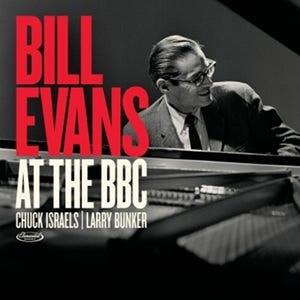
Bill Evans — At The BBC
Pianist Bill Evans played such an integral part in the evolution of jazz that any previously unreleased music is a cause to celebrate and bring into the commercial realm. This year’s Record Store Day addition to the Evans discography is a two disc set presenting two British TV broadcasts from the 1965 BBC program, Jazz 625, hosted by trumpeter Humphrey Lyttelton featuring Evan’s notable “second” trio with bassist Chuck Israels and drummer Larry Bunker. In March 1965, the BBC taped the broadcasts captured on this recording, airing them on May 12 and December 29 of the same year. The trio encountered had been performing together for two years, since the breakup of Evans’ famous 1961 Village Vanguard Trio (Bill Evans: The Complete Village Vanguard Recordings, 1961 (Riverside, 1961)) following the death of bassist Scott LaFaro and drummer Paul Motian’s 1963 exit. These two 30-minute performances find the trio is exceptional form as they perform the expected (“My Foolish Heart” and “Nardis”) and the unexpected (“Israel”). This is producer Zev Feldman’s 15th curation of Evans material for release.
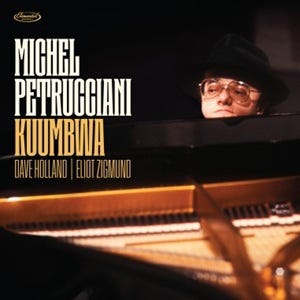
Michel Petrucciani — Kuumbwa
French pianist Michel Petrucciani, with bassist Dave Holland and drummer Eliot Zigmund, appeared at the Kuumbwa Jazz Center in Santa Cruz, California, on May 11, 1987. Petrucciani had come to New York City three years prior and was just making a name for himself stateside with his Blue Note Records debut with Pianism (1986). Twenty-four years old at the time of this recording, the pianist was to have a short life, dying at 36 in 1999. Petrucciani’s short career was dense with accomplishments and a substantial amount of fabulous music. Petrucciani’s playing is full of mirth and invention. His ballad treatments, while influenced by Bill Evans, are strictly his own, with the pianist always having something different to say. The pianist’s vision on “Autumn Leaves,” “All the Things You Are,” and the frequent Evans vehicle, “Nardis” betrays a fertile mind and adventuresome spirit. The pianist’s support was empathic and attentive. Appropriately, Petrucciani’s grave is in Paris’ Le Père Lachaise Cemetery, one tomb away from Frédéric Chopin. Petrucciani is due an artistic revisit. Let this recording be the start of that.
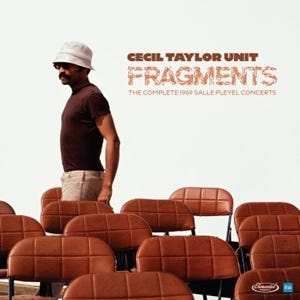
Cecil Taylor — Fragments: The Complete 1969 Salle Pleyel Concerts
Before he took the stage at Salle Pleyel in 1969, Cecil Taylor had already spent over a decade dismantling the traditional architecture of jazz. A classically trained prodigy from the New England Conservatory, Taylor rejected the “swing” conventions of his era to treat the piano as a percussive battery of eighty-eight tuned drums. By the late 1950s, landmark releases like Jazz Advance (Transition, 1957) and Looking Ahead! (Contemporary, 1959) signaled the birth of a new avant-garde, while his 1966 Blue Note masterpieces, Unit Structures and Conquistador!, codified his “unit structures” philosophy—a complex, polyrhythmic approach to group improvisation that demanded psychic athletic rhythm from his collaborators. Throughout his formative years, Taylor’s radical vision drew in a tier of elite musicians capable of matching his intensity. He shared bandstands and recording studios with titans such as John Coltrane (on Coltrane Time (Blue Note, 1962)), Archie Shepp, and Steve Lacy, while forging a legendary, lifelong musical shorthand with alto saxophonist Jimmy Lyons and drummer Andrew Cyrille. By the time the Cecil Taylor Unit arrived in Paris for the performance captured on Fragments, Taylor wasn’t just a pianist; he was the lightning rod for a movement that had successfully pushed jazz into the realm of pure, high-energy abstraction. A historic artifact, to be sure, Fragments is bona fide avant-garde, free jazz and as such caveat emptor.
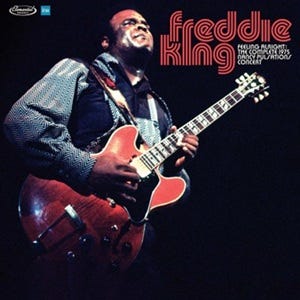
Freddie King — Feeling Alright: The Complete 1975 Nancy Pulsations Concert
Before commanding the stage at the Nancy Jazz Pulsations Festival in 1975, Freddie King—affectionately known as the “Texas Cannonball”—had already cemented his place as one of the “Three Kings” of electric blues guitar alongside B.B. and Albert King. Born in Gilmer, Texas, King moved to Chicago as a teenager, where he blended the open-string riffs of the Lone Star State with the raw, percussive bite of the West Side Chicago sound. By 1961, he had revolutionized the genre with his debut instrumental album, Let’s Hide Away and Dance Away with Freddy King, featuring the classic “Hide Away,” and the vocal showcase Freddy King Sings, which delivered hits like “I’m Tore Down” and “Have You Ever Loved a Woman”. Throughout his career, King’s explosive style—defined by his unique use of a plastic thumb pick and metal finger pick—made him a bridge between traditional blues and the burgeoning rock scene. His 1970s revival on Leon Russell’s Shelter Records produced high-octane favorites like Getting Ready... and the signature track “Goin’ Down,” while his final years saw him collaborating with Eric Clapton on the 1974 album Burglar. King’s appearance at the 1975 Nancy Pulsations Concert catches the guitars heading a potent sextet, winding through 16 corrosive electric blues with hot performances including a molten “Have You Ever Loved A Woman,” “Goin’ Down,” and a cover of Dave Mason’s “Feeling Alright.” King absolutely kills on this recording.
Very informative and well written article!