


Nearly fifty years of shared history at the New England Conservatory (NEC) sustain the musical partnership between pianist Ran Blake and vocalist Dominique Eade. Their collaboration began in the late 1970s when Eade enrolled at NEC as a student and studied under Blake, a central developer of the Third Stream movement—an idiom synthesizing classical formal structures and avant-garde techniques with jazz improvisation. Over the subsequent decades, this mentor-student dynamic transitioned into an artistic peerage, with both figures eventually serving as colleagues on the NEC faculty. Despite their extensive history of live performances, they did not document their institutional partnership in a duo recording studio setting until they released Whirlpool (Jazz Project, 2011), which established their shared focus on a monochromatic, cinematic aesthetic. They followed this in 2017 with Town and Country (Sunnyside Records), a project that examined Americana and folk traditions through the systematic deconstruction of compositions by figures such as Johnny Cash and Bob Dylan.
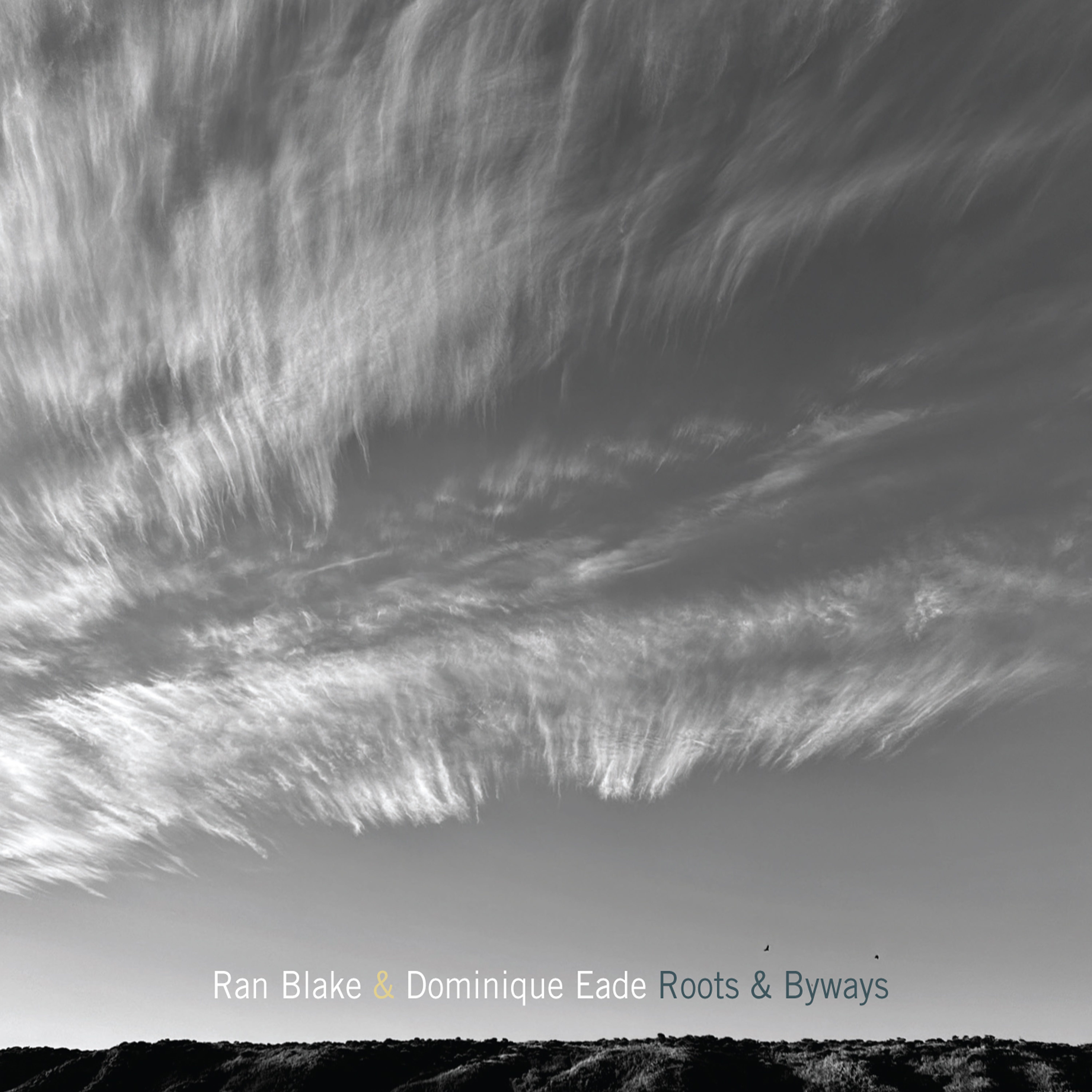
With Roots & Byways (Sunnyside Records), Blake and Eade returned to NEC’s Jordan Hall to document their contemporary conventional musical wisdom. The structural logic of the album departs from the traditional vocalist-accompanist paradigm, operating instead as a counterpoint between equal participants where the piano actively restructures the harmonic terrain beneath the voice. Blake’s pianism eschews standard jazz comping formulas. He uses radical reharmonization, clusters recalling Charles Ives, and a stark approach that strips structural themes of their conventional architecture. Consider his recasting of Whitney Houston’s “Saving All My Love for You” by pouring it into a “God Bless the Child” form. Rather than following a predictable formal layout, his accompaniments function as fluid sound design. On “On Top of Old Smokey,” Blake introduces sparse, diatonic chords in the upper register that subsequently dissolve into dense, metallic chromatic clusters to track the narrative arc of the lyrics. His deliberate application of silence alters the metrical flow, exposing the solo vocal line to sudden structural isolation.
Charting these unpredictable shifts requires harmonic orientation and improvisational flexibility from Eade. Using a low, dark vocal timbre and agile pitch control, she stabilizes the melodic profile above Blake’s abstract pitch centers. Rather than resisting Blake’s oblique accompaniment strategies, Eade treats their interaction as two independent vessels navigating identical fluid surface tension. She manages the primary thematic material by varying her rhythmic placement and securing clear tonal centers, even when Blake departs from the objective harmonic center of the composition. She sustains this method throughout the album, notably on their interpretations of Max Roach and Abbey Lincoln’s “Mendacity” and Charles Mingus’s “Portrait.” In these songs, the piano closely comments on the text, explicitly mirroring the inflections of her delivery.
Roots & Byways is a continuation of the intimate jazz dialogue the two developed on Whirlpool. Blake and Eade continue to identify unmapped pathways within familiar repertoires. By dismantling traditional voice-and-piano approaches and operating within an environment of spontaneous reinvention, they have produced music that feels rooted in historical practices yet contemporary in its execution. The album offers an examination of how two performers can systematically rewrite the conventional parameters of the voice-and-piano duo. Through these interpretive choices, Blake and Eade move beyond simple documentation of the American songbook to expose its underlying structural complexities.
❤️
Roots & Byways - I listened yesterday! Satisfying to hear Ran & Dominique navigate the unknown - being intrigued by what emerges. Poignant piece, thank you.