


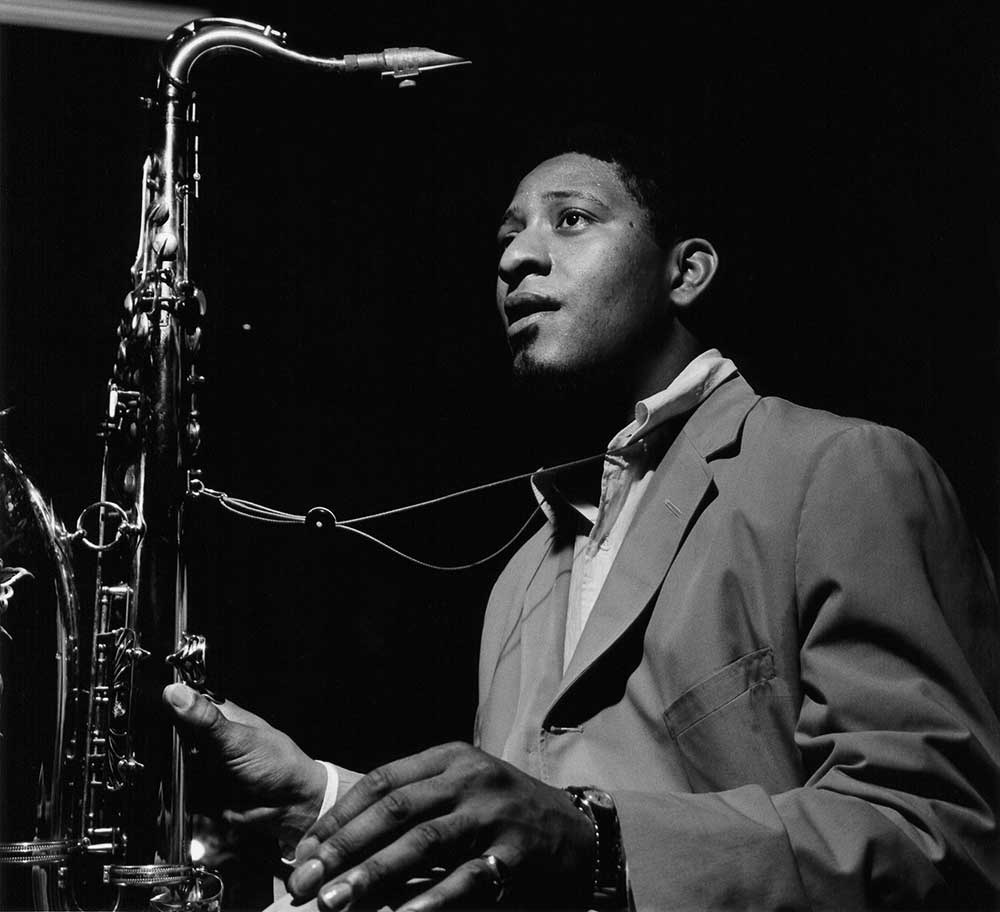
If improvisation is the soul shine of jazz, then jazz lost its greatest improvisor and all that is good and just will never make another one. Sonny Rollins, the legendary tenor saxophonist whose commanding tone, inexhaustible improvisational genius, and relentless pursuit of musical truth shaped the sound of modern jazz, passed away on May 25, 2026, at his home in Woodstock, New York. He was 95 years old. As the final surviving giant of the definitive post-bebop era, Rollins’ departure marks the end of an epoch, leaving behind a monumental legacy that sub-atomically altered the expressive possibilities of American music.
Born on September 7, 1930, in New York City, Rollins grew up on Sugar Hill in Harlem, surrounded by the vanguard of the nascent bebop movement. Initially picking up the alto saxophone before permanently switching to the tenor, he was performing professionally by his late teens alongside pioneers like Babs Gonzales and Bud Powell. By the early 1950s, his rich, muscular tone and thematic approach to improvisation caught the attention of the genre’s heaviest hitters, leading to historic sideman recordings with Miles Davis, Thelonious Monk, and the Clifford Brown-Max Roach Quintet.
Over a prolific career spanning seven decades and over 60 albums as a leader, Rollins recorded some of the most essential documents in jazz history. Indispensable by any measure, Rollins’ releases in the 1950s defined his artistry: Miles Davis with Sonny Rollins (Prestige, 1954) features his seminal early compositions “Oleo,” “Doxy,” and “Airegin,” which quickly became foundational elements of the jazz lexicon. Saxophone Colossus (Prestige, 1956) was the saxophonist’s masterpiece as a leader. Backed by Tommy Flanagan, Doug Watkins, and Max Roach, this record solidified his stature with the definitive calypso-jazz fusion “St. Thomas” and his extended, brilliant improvisation on “Blue 7.”
Critics celebrate Tenor Madness (Prestige, 1956) for its historic title track, which features the only recorded studio battle between Rollins and his monumental contemporary, John Coltrane. The groundbreaking Way Out West (Contemporary, 1957) featured a piano-less trio that paired his horn with the bare skeleton of a rhythm section: bass (Ray Brown) and drums (Shelly Manne). The recording showcased his radical spatial freedom and signature dry wit through jazz interpretations of classic cowboy tunes. A Night at the Village Vanguard (Blue Note, 1957) is a live tour-de-force that captured the raw, propulsive power of his trios, quickening his reputation as the definitive improviser of his generation and beyond.
The 1958 Freedom Suite (Riverside) further expanded his vision of the saxophone trio in the presence of bebop stalwarts Oscar Pettiford and Max Roach. The widely bootlegged St. Thomas: Sonny Rollins Trio 1959 (Dragon) (legitimized on Sonny Rollins - Weaver Of Dreams: The 1959 European Tour Recordings (Resonance Records, 2024)) captured Rollins at the height of his creativity at a concert in Stockholm, Sweden, on March 2nd of that year. This recording offered an interesting contrast to Saxophone Colossus, providing Rollins the freedom to further explore his already impressive catalog.
Rollins famously wrestled with his own immense talent, routinely stepping away from the limelight at the height of his fame for intense periods of self-examination—most notably during his legendary 1959–1961 sabbatical, when he practiced for up to fifteen hours a day on the pedestrian walkway of the Williamsburg Bridge to avoid disturbing his neighbors. This metaphorical wood shedding led to Rollins’ most anticipated release, The Bridge (RCA Victor, 1962). His return to the recording studio following his Williamsburg Bridge retreat, displaying a matured, complex lyricism alongside guitarist Jim Hall.
But this is a decade slice from a seven decade career. But what a slice it is. Rollins never ceased his search for musical communion: practicing, studying, considering, playing. What a legacy that now belongs to us.
Oh no !