

What’s the definition of “perfect pitch?”
Throwing a viola into a dumpster without hitting the rim.
The poor, misunderstood viola. Even the master Niccolò Paganini, with his grand Sonata per la Grand Viola (1934), nor Hector Berlioz’s Harold in Italy (1934) — the former resulting from a disagreement between Paganini and Berlioz about the lack of viola virtuosity in Harold — could save the instrument from decades of orchestral bench-warming jokes. Yet, Jimbo Ross has spent over fifty years dismantling this bias, first gaining jazz recognition when trumpeter Don Ellis introduced him to a festival audience as “the only jazz violist in captivity.”
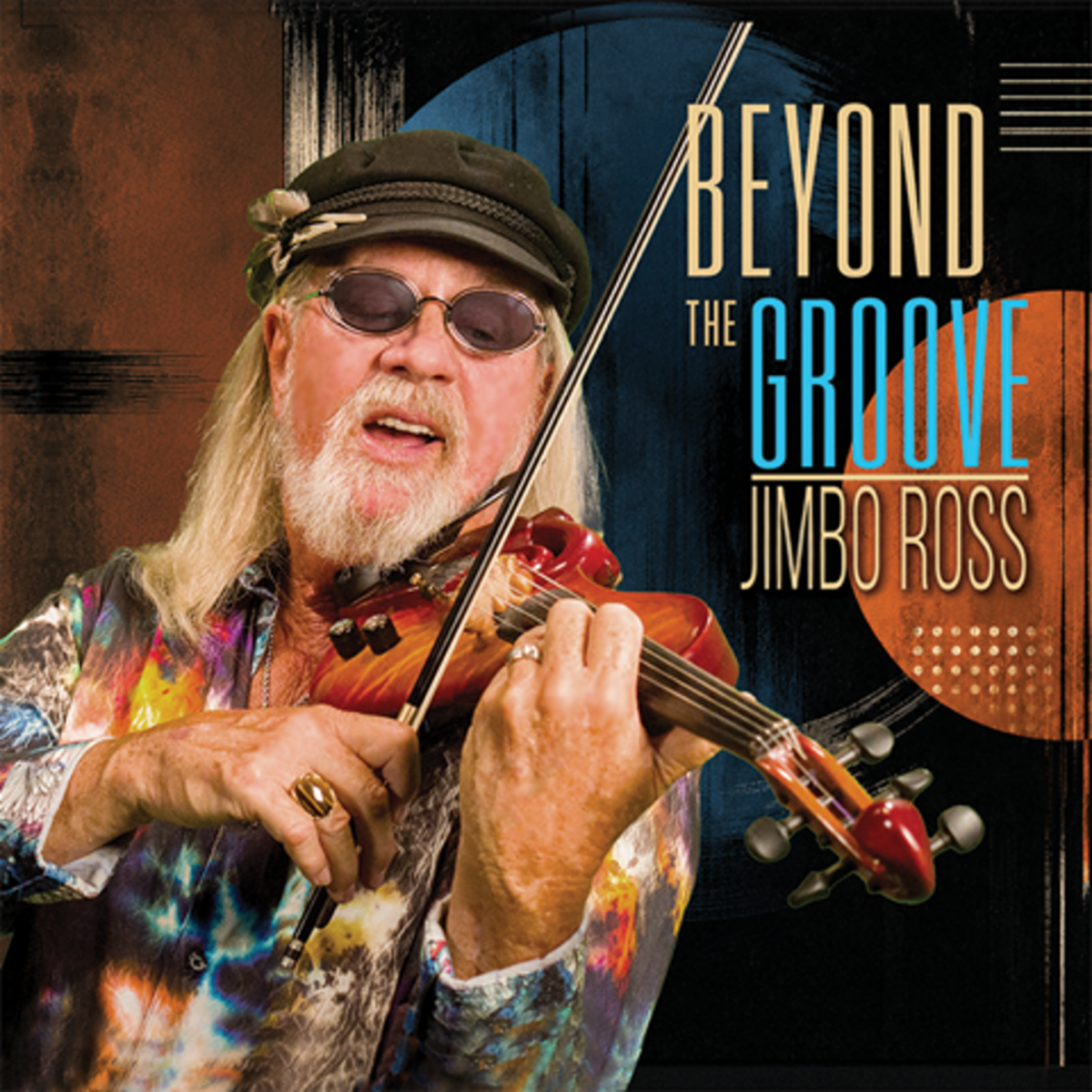
A practitioner of the 5-string electric viola, Ross has spent decades navigating the line between classical precision, blues grit, and straight-ahead jazz improvisation. On Beyond the Groove (Bodacious Records, 2026), Ross presents his chosen instrument within a supportive and texturally grounded quintet. The core band features Stuart Elster on piano, Joe Gaeta on guitar, Peter Marshall on bass, and Ron Wagner on drums. Operating entirely in an acoustic, organic space—devoid of digital pedals or distortion—the ensemble functions as a swinging unit, creating a conversational backdrop that allows the warm, cello-like lower register and upper range of Ross’s instrument to carry the melodic weight of classic bebop and hard bop.
This release arrives as a successor to Ross’s recent recording baseline, notably his 2025 album So Do It! (Bodacious Records, 2025) and his preceding label debut, Jazz Passion & Satin Latin (Bodacious Records, 2024). Where his prior work leaned into a blues-infused hard-bop aesthetic that merged funk undercurrents with straight-ahead jazz, Beyond the Groove shifts its primary focus toward a foundational bebop and post-bop repertoire. The record lands in a contemporary jazz landscape that frequently favors avant-garde abstraction or heavy electronic fusion, making Ross’s project a deliberate statement of purpose. By re-examining canonical masterworks from composers like Thelonious Monk, Benny Golson, and Miles Davis through the distinct tonal voice of the viola, the Ross’ vision bridges historical reverence and active, physical swing.
The core of the record lies in how Ross and his quartet handle these mid-century masterworks, proving that the viola can speak with the same velocity and articulation as a horn. Ross introduces Thelonious Monk’s “Ba-Leu Bolivar Ba-Lues-Are” by leaning into its intrinsic rhythmic quirks. The ensemble shifts from punchy, percussive bop motifs into a rolling, bluesy groove, creating a steady pocket for guitarist Joe Gaeta, whose solo offers dynamic variation and clean, linear phrasing. Benny Golson’s “Whisper Not” addresses the historical myth of viola clumsiness. Ross navigates the complex harmonic shifts with speed, utilizing the upper register of his 5-string setup to deliver clean lines that maintain accurate intonation and a warm tone. At high or low velocity, Ross makes these pieces swing hard.
Ross applies this structured approach to the music of Bill Evans, specifically by including “Peri’s Scope” and Scott LaFaro’s associated trio staple, “Gloria’s Step.” Rather than leaning into the impressionistic, modal wash traditionally tied to Evans’s keyboard architecture, Ross uses the precise bow control and tactile clarity of his five-string setup to pull the underlying melodies into a sharp, definitive relief. By choosing a slower, deliberate tempo on “Peri’s Scope,” he sustains notes longer to anchor the harmony, carving out room for Stuart Elster to drive the piano lines forward with a firm physical touch. Instead of drifting through abstract textures, the interpretation reshapes the composition into a bright, linear train of thought, trading impressionistic ambiguity for straight-ahead melodic momentum.
Built in clear instrumental contrast, Monk’s “I Mean You” opens with a low-register dialogue between Stuart Elster’s piano and Peter Marshall’s bass. Ross enters through these dark textures with a bright viola motif before the full quintet transitions into a fast-paced, rhythmic charge driven by Ron Wagner’s cymbal work. Operating as a hard-driving cooker, Miles Davis’s “Solar” (another frequent vehicle for Evans) pushes the technical pacing of the rhythm section. Ross handles the melodic head with a horn-like urgency, followed by harmonic counterplay between his viola and Elster’s piano comps. Shifting tempos and sharp Latin-jazz inflections define the closing rendition of Horace Silver’s “Nutville.” The quintet maintains an even energy throughout, executing rapid-fire instrumental trades before building to a climax that demonstrates structural complexity and raw physical swing.
Beyond the Groove is a clear, forward-looking statement in the 2026 jazz landscape. In an era where contemporary releases frequently obscure tradition under dense, overproduced digital soundscapes or lean toward sterile, academic abstractions, Jimbo Ross and his quintet offer a reminder of the power of pure, organic swing. By taking the road less traveled—interpreting bebop’s demanding architecture on an instrument historically sidelined by the genre—Ross delivers a clean study in a welcome modern reinvention.