


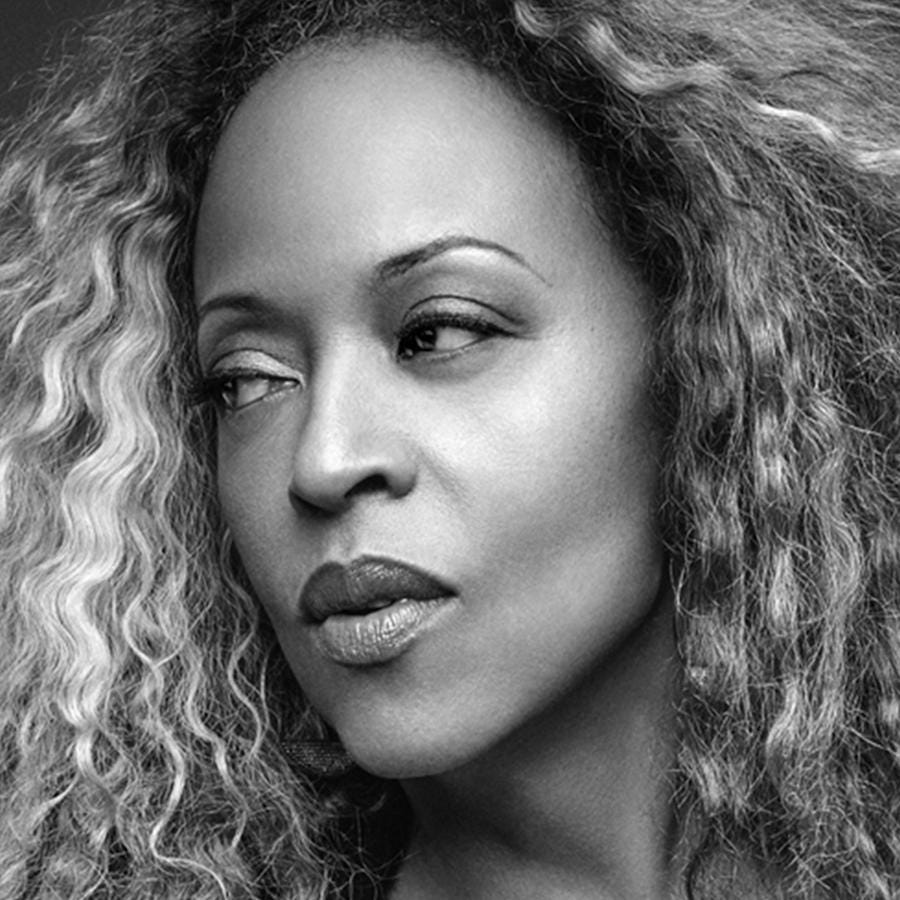
The passing of Cassandra Wilson on September 2, 2026, at age 70, silences one of the most courageous voices in the history of American music. Wilson did not merely sing jazz; she excavated it, stripping away the decades of polite, mid-century supper-club lacquer to expose the raw, blood-and-soil roots beneath. Her legendary 1990s run with Blue Note Records forever expanded the boundaries of vocal improvisation. Yet, to understand her true magnitude, one must look both before and beyond that transformative decade—back to her avant-garde beginnings, outward to her monumental work in historic jazz suites, and deep into the Mississippi Delta mud that permanently coated her sonic vocabulary.
Born in Jackson, Mississippi, in 1955, she spent her early career expanding rhythmic boundaries as a co-founder of Brooklyn’s avant-garde M-Base Collective in the 1980s. Alongside artists like Steve Coleman, she used her voice as an agile, horn-like instrument, navigating complex time signatures. She earned early critical praise for her 1988 standard album Blue Skies (JMT, 1988), and her soaring dramatic capabilities later led Wynton Marsalis to cast her as Leona in his Pulitzer Prize-winning historical suite, Blood on the Fields (Columbia), in 1997.
However, it was her signing with Blue Note Records in 1993 that completely redefined vocal jazz. Across a series of landmark 1990s albums, Wilson dismantled genre walls, substituting traditional post-bop conventions with a deeply visceral, acoustic soundscape rooted in the soil of the American South. Her Blue Note tenure changed by seamlessly integrating American roots music into her projects. Rather than sticking solely to the Great American Songbook, she approached contemporary pop, folk, and country material with the serious weight of a jazz master.
Her 1993 album, Blue Light ‘Til Dawn (Blue Note), produced by Craig Street, served as her commercial and artistic breakthrough. It wove a rich tapestry of jazz, blues, folk, and R&B into a singular sound that opened up new avenues of expression, reinventing tracks by Robert Johnson, Joni Mitchell, and Van Morrison. Her critically acclaimed 1995 follow-up, New Moon Daughter (Blue Note), earned Wilson her first Grammy Award for Best Jazz Vocal Performance. It pushed boundaries even further, featuring stark, haunting covers of U2, The Monkees, Hank Williams, and Son House. She closed out the decade balancing her rustic aesthetic with brilliant piano interplay alongside Jacky Terrasson on Rendezvous (Blue Note, 1997), and delivering Traveling Miles (Blue Note, 1999), an evocative, highly personalized tribute album dedicated to Miles Davis. Wilson continued releasing music in the 2000s, ending on a spectacular note with Coming Forth By Day (Legacy, 2015), Wilson’s tribute to Billie Holiday on the occasion of the centenary of her birth.
Wilson discarded the rigid, formal structure associated with mid-century jazz divas in favor of an interpretive method that felt live, fluid, and profoundly atmospheric. She intentionally leaned into a spacious layout where her rich, heavy contralto voice could stretch over individual tones. By pushing the traditional drum kit out of the center of her arrangements, she freed her music from the sharp highs of jazz cymbals. She observed she could hear more of the overtones and undertones of her voice if she did not have the kit, allowing her more space to explore an intimate, conversational vocal range.
The defining sonic fingerprint of Wilson’s 1990s work was its thick, swampy Mississippi Delta vibe. She subverted the expectation that a jazz singer must be backed by a grand piano or a swinging big band. Instead, she anchored her ensembles around acoustic stringed instruments that were historically excluded from the jazz bandstand. Traditional drum kits and cymbals were swapped for hand percussion, shakers, and African diasporic rhythms. The acoustic grand piano was replaced by steel-string acoustic guitars and resonators. Traditional horn sections gave way to banjos, mandocellos, bouzoukis, and slide guitars. By relying on these rustic instruments, Wilson grounded her music in the country blues of her native home. Her instrumentation gave the music a wooden, front-porch resonance, effectively proving that the complex harmonic language of jazz could walk hand-in-hand with the dirt-road emotionality of Delta blues.
Cassandra Wilson leaves behind a landscape forever altered by her refusal to accept jazz as a museum piece. By treating the music of Robert Johnson, U2, and Miles Davis with the same spiritual reverence, she tore down the arbitrary walls that separated the high art of the jazz club from the dirt-road honesty of the delta blues shack. She proved a singer could look backward into history while simultaneously stepping forward into the avant-garde, carrying her native Mississippi in every low, resonant note. As we spin New Moon Daughter or Blue Light ‘Til Dawn in the wake of her passing, we are reminded that her music never belonged to a single genre, but to the deep, expansive current of the American soul. Her voice is gone, but the soil of American music will turn over her influence for generations to come.
This article is dedicated to Margaret Nicholls, who organically embraced Wilson’s tensile aesthetic.
Hi Chris, thank you for your kind words. I had not yest started to music write when I heard Wilson in the early '90s. I was impressed with her originality and felt she was the most important jazz vocalist of the decade. She was the age of my late brother, passing away too young.
She was my favourite singer, we lost her too soon ❤️